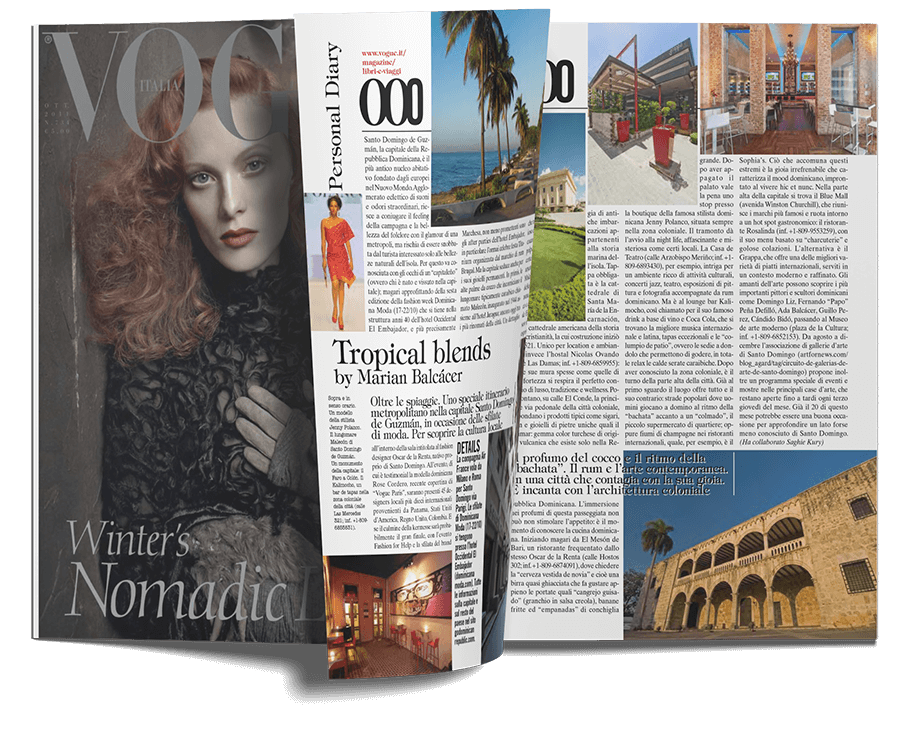

Santo Domingo de Guzmán, the capital of the Dominican Republic, is the oldest settlement founded by Europeans in the New World.
An eclectic agglomeration of extraordinary sounds and smells, it manages to combine the feeling of the countryside and the beauty of folklore with the glamor of a metropolis, but it risks being snubbed by tourists interested only in the natural beauty of the island.
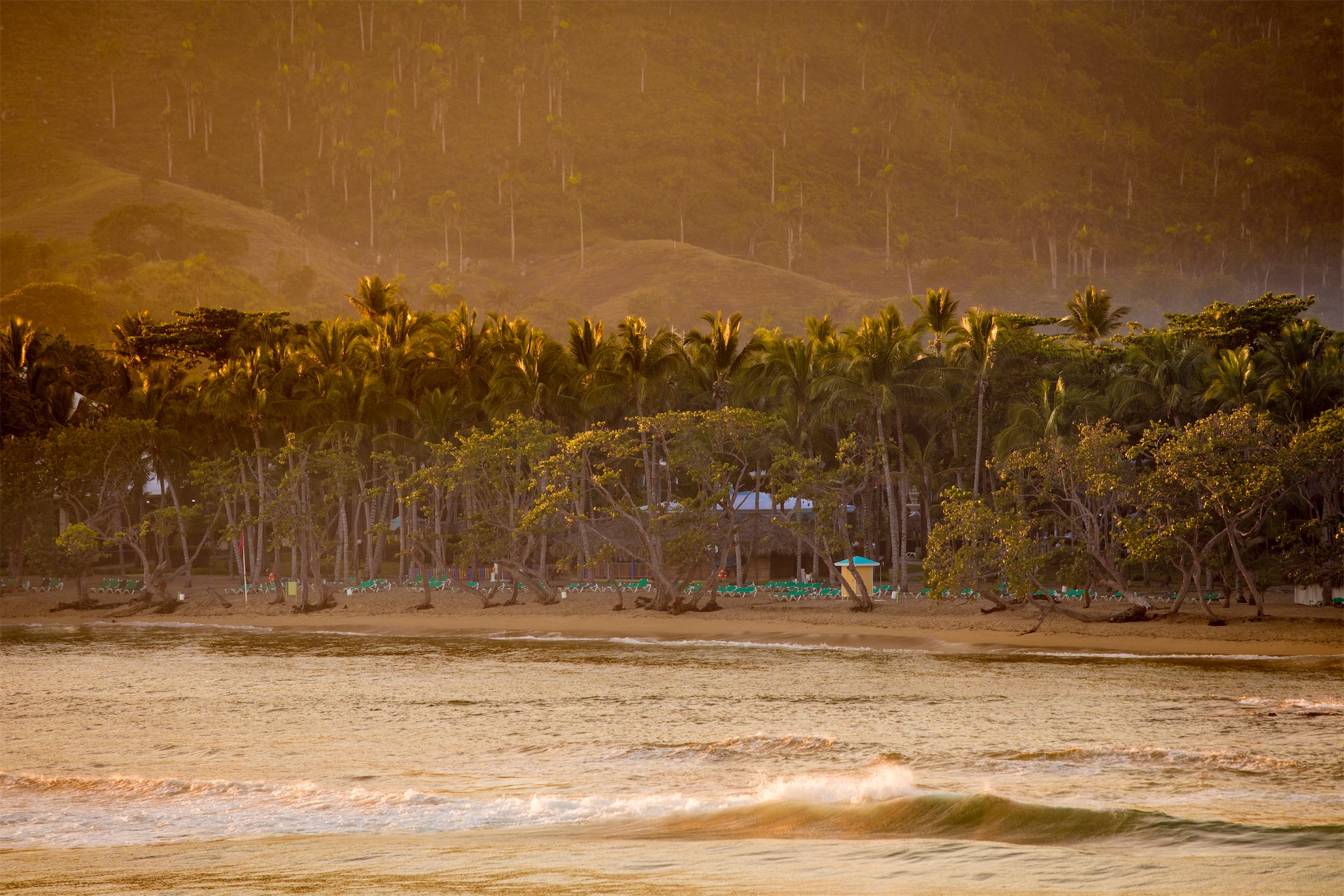
For this reason, it should be known through the eyes of a “capitaleño” (i.e. someone who was born and lived in the capital); perhaps taking advantage of the sixth edition of the Dominicana Fashion Week held in the 1940s structure of the Occidental El Embajador hotel, and more precisely Marchesa, the afterparties of the Embajador hotel are no less promising, in particular the now famous Titanium party organized by the Brugal rum brand. But the capital also seduces with its permanent jewels. First of all, the tall coconut palms that frame the typical Caribbean waterfront called Malecón, inaugurated in 1944 together with the Jaragua hotel; still today among the most renowned in the city. A detail that makes the local climate even more joyful and Latin are the sellers of freshly picked coconut juice: rich in potassium (the pulp, on the other hand, is used in traditional island recipes), it is much loved by those who jog, in fact, on the Malecón.
Continuing to discover the city, and in particular the ancient colonial area, there is no shortage of historical and architectural points of interest: Plaza de España, the Alcázar de Colón, the Atarazana Naval Museum where archaeological finds and clothing are exhibited in the room named after the fashion designer Oscar de la Renta, a native of Santo Domingo. The event, which is witnessed by the Dominican model Rose Cordero, recent cover of “Vogue Paris”, will be attended by 45 local and ten international signers from Panama, the United States of America, the United Kingdom, and Colombia. And if the highlight of the event will probably be the grand finale, with the Fashion for Help event and the brand’s fashion show already of ancient boats belonging to the island’s marine history.
A mandatory stop is the cathedral of Santa María de la Enconación, the first American cathedral in the history of Christianity, whose construction began in 1521. On the other hand, the Nicolas Ovando hostel is unique in terms of location and ambiance: within its walls as thick as those of a fortress you can breathe the perfect combination of luxury, tradition and wellness. Not far away, on Calle El Conde, the main pedestrian street of the colonial city, typical products such as cigars, rum and unique stone jewelry such as larimar abound: a turquoise-colored gemstone of volcanic origin that exists only in the Dominican Republic. Immersing yourself in the scents of this walk cannot but stimulate your appetite: it’s time to learn about Dominican cuisine. Perhaps starting with El Mesón de Bari, a restaurant frequented by Oscar de la Renta himself (Calle Hostos 302; info +18096874091), where you can ask for the ‘Cerveza Vestida de Novida’, that is, an almost iced beer that makes you fully enjoy dishes such as ‘Cangrejo Guisa Do’ (crab in Creole sauce), fried bananas and ’empanadas’ by conchero big mile. After satisfying your palate, it’s worth a stop at the boutique of the famous Dominican designer Jenny Polanco, always located in the colonial area.
The sunset starts night life, fascinating and mysterious like certain places. The Casa de Teatro (Calle Arzobispo Meriño; info. +1 8096893430), for example, intrigues with an environment rich in cultural activities, jazz concerts, theater, painting and photography exhibitions accompanied by Dominican rum. But it is at the Kali Mocho lounge bar, so called for its famous drink based on wine and Coca Cola, where you can find the best international and Latin music, exceptional tapas and the “swing de patio”, or the rocking chairs that allow you to enjoy warm Caribbean evenings in total relaxation. After discovering the colonial area, it is the turn of the upper part of the city. Right at first glance, the place offers everything and its opposite: popular streets where men play dominoes to the rhythm of the ‘bachata’ next to a ‘collado’, the small neighborhood supermarket; or rivers of champagne in international restaurants, such as, for example, Sophia’s.
What these extremes have in common is the irrepressible joy that characterizes the Dominican mood, based on living chic and nunc. In the upper part of the capital is the Blue Mall (Avenida Winston Churchill), which brings together the most famous brands and revolves around a gastronomic hot spot: the Rosalinda restaurant, with its menu based on ‘charcuterie’ and delicious breakfasts. The alternative is Grappa, which offers one of the best varieties of international dishes, served in a modern and refined setting. Art lovers can discover the most important Dominican painters and sculptors such as Domingo Liz, Fernando “Papo” Peña Defilló, Ada Balcácer, Guillo Perez, Cándido Bidó, passing by the Museo de Arte Moderno (plaza de la Cultura). From August to December, the Santo Domingo Association of Art Galleries also offers a special program of events and exhibitions in the main art houses, which remain open late every third Thursday of the month.